



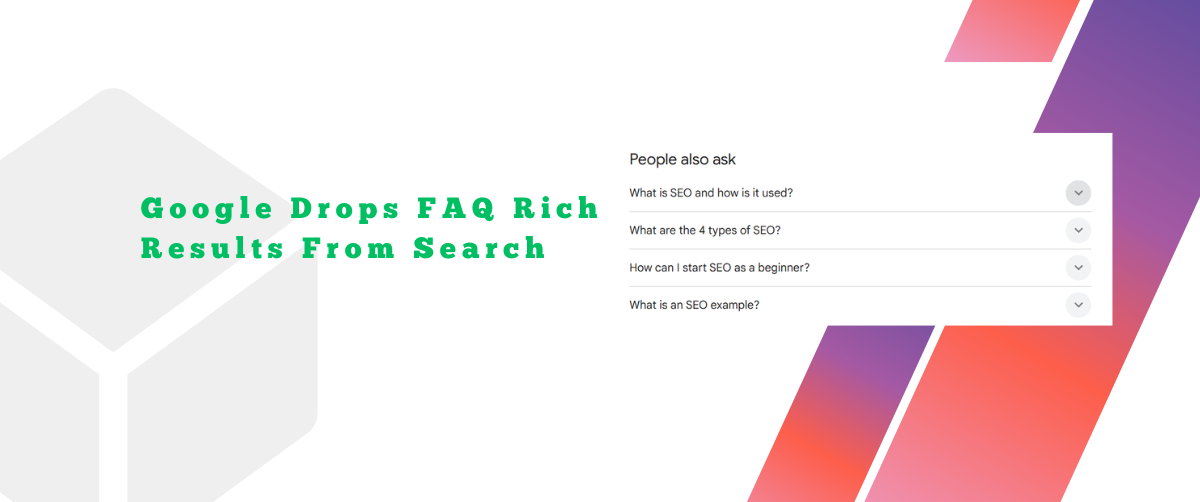
If you’ve been relying on FAQ rich results to get more visibility in Google Search, we have some news for you. Google has officially dropped FAQ rich results, and the change is already live. No countdown. No long grace period. It’s gone.
Whether you’re a website owner, an SEO professional, or someone who just wants to understand how search results work, this article breaks everything down in plain English. What happened, why it matters, and most importantly what you should do about it right now.
What Are FAQ Rich Results? (A Quick Refresher)
Before we get into the big announcement, let’s make sure we’re on the same page.
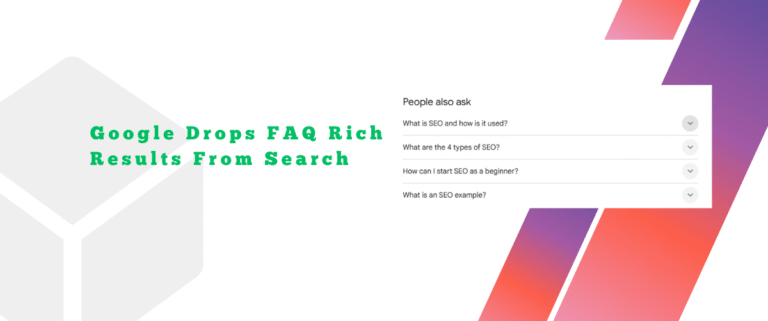
FAQ rich results were those expanded search listings you’d sometimes see on Google. You’d search for something, and one of the results would show a little expandable section below it with questions and answers right there on the search page. No clicking required.
For example, you might search “how to reset a password” and see a result that already had three collapsible Q&A panels sitting right under the page title. Pretty handy for users. Even better for website owners who got to occupy more space on the search results page.
Websites achieved this by adding a specific type of structured data to their pages basically a chunk of code that told Google, “Hey, this page has questions and answers. Show them in search.” This is called FAQ Page schema markup.
For a while, it worked really well. Sites that used FAQ structured data correctly could dramatically increase their click-through rates by taking up more real estate in the search results.
What Exactly Did Google Announce?
Google has officially confirmed that FAQ rich results will no longer appear in Google Search, effective May 7, 2026.
Here’s the key part from Google’s own developer documentation:
FAQ rich results are no longer appearing in Google Search. We will be dropping the FAQ search appearance, rich result report, and support in the Rich Results Test in June 2026. To allow time for adjusting your API calls, support for the FAQ rich result in the Search Console API will be removed in August 2026.
So, the rollout is happening in phases:
- May 2026 — FAQ rich results stop appearing in search results
- June 2026 — The FAQ report in Search Console disappears; the Google Rich Results Test stops supporting FAQ
- August 2026 — Search Console API support for FAQ rich results is removed
Google Search Console will also stop reporting on FAQ structured data going forward. So, if you’ve been tracking FAQ performance in Search Console, that dashboard is going away too.
Why Did Google Drop FAQ Rich Results?
Google hasn’t released a long official statement explaining the reasoning, but the broader context makes it pretty easy to connect the dots.
The AI Overviews Factor
Google has been pushing hard toward AI Overviews (formerly SGE Search Generative Experience). These are AI-generated summaries that appear at the top of search results and directly answer user questions. Sound familiar? That’s basically what FAQ rich results used to do.
When AI Overviews can already surface Q&A-style answers dynamically from across the web, a static FAQ box from a single website becomes somewhat redundant. Google is clearly prioritizing its AI-powered answer layer over pre-formatted structured snippets.
Rich Results Are Being Narrowed Down
This isn’t the first time Google has trimmed rich result types. Over the years, Google has removed or limited various SERP features. FAQ rich results being cut is part of a larger pattern — Google is getting more selective about which structured data types get visual treatment in the search results.
Low Value for Users?
There’s also a practical angle. If every website starts stuffing FAQ schema onto every page just to grab more SERP space (which, let’s be honest, many did), it dilutes the usefulness for actual searchers. Google likely saw this as a feature that was being gamed more than genuinely used.
How Does This Affect Your Website?
This depends on how heavily your SEO strategy leaned on FAQ rich results.
If You Were Getting Traffic Boosts from FAQ Snippets
You may notice a dip in click-through rates from Google. If your pages were showing up with those expandable Q&A sections and driving clicks, that visual advantage is now gone. Your listing will look like a regular blue link again competing on title, meta description, and ranking position alone.
Keep a close eye on your Google Search Console data over the next few weeks. Look specifically at:
- Impressions — Did they drop for pages that had FAQ schema?
- CTR — Are fewer people clicking through to your site?
- Average Position — Has you’re ranking itself changed, or just the appearance?
If You Were Just Getting Started with FAQ Schema
If you were planning to add FAQ structured data to boost your SERP appearance, you can skip that particular strategy. It won’t give you any visual benefit in Google anymore.
What About Other Search Engines?
You can remove the FAQ structured data from your code if you want, but you can also leave it other search engines may still be able to process and use it for their own purposes.
Bing, for example, still shows some rich snippets in its results. If you get traffic from Bing or other search engines, keeping your FAQ schema in place might still have some value.
What Should You Do Now? Practical Steps to Take
Okay, enough background. Let’s talk action. Here’s what smart website owners and SEO pros should do right now.
-
Audit Your Pages with FAQ Schema
Use the Google Rich Results Test tool (while it still supports FAQ, until June 2026) to identify which of your pages have FAQ structured data. Make a list.
-
Don’t Panic-Delete Everything
Resist the urge to strip out all your FAQ schema overnight. As mentioned above, other search engines still read it. Also, keeping well-structured Q&A content on your pages is still valuable for users and for AI Overviews, which may pull answers from your page content.
-
Focus on Content Quality, Not Schema Tricks
This is actually a good reminder that content quality has always mattered more than schema tricks. Google is pushing in the direction of rewarding genuinely helpful, well-written content. Invest your time there.
-
Explore Other Structured Data Types That Still Work
FAQ schema is out for rich results, but plenty of structured data types are still alive and useful:
- How-To schema — still showing in some results
- Review/Rating schema — still active for e-commerce and service pages
- Product schema — still valuable for online stores
- Article schema — still recommended for news and blog content
- Event schema — still showing for events in search
Run your pages through the Google Rich Results Test regularly to make sure your other schema types are still valid and eligible for display.
-
Monitor Traffic Closely for the Next 60–90 Days
If your organic traffic drops noticeably over the coming weeks, FAQ rich results could be part of the explanation. Use Google Search Console and your analytics platform to track the change. Knowing the cause helps you respond smarter.
Does FAQ Content Still Matter for SEO?
Here’s a question worth answering directly: should you still have FAQ sections on your website?
Yes, absolutely. Just not for the same reason.
Well-written FAQ content still helps SEO in other ways:
- It targets long-tail, conversational queries that people actually type
- It aligns well with voice search patterns
- It can help Google understand your page’s topic more clearly
- It gives users answers they’re looking for without hunting through your content
- It can get picked up by Google’s AI Overviews
The difference is that you’re now writing FAQs for users and AI crawlers, not to unlock a visual SERP feature. That’s actually a healthier reason to create the content in the first place.
A Word on the Google Rich Results Test
If you’ve been using the Google Rich Results Test tool to validate your structured data, here’s the timeline to know:
- It currently still supports FAQ schema validation
- Support for FAQ rich results in the Rich Results Test will be dropped in June 2026
So, you have until June to use it for FAQ testing. After that, running FAQ schema through the tool won’t return meaningful results for that type specifically.
Conclusion
Google drops FAQ rich results from search, and just like that, a feature that many SEO professionals have relied on for years is gone. It’s a reminder that search is always evolving, and what works today may not work tomorrow.
The good news? The fundamentals haven’t changed. High-quality content, proper on-page structure, and a good user experience will always matter. Structured data is still valuable just not for FAQ anymore.
Take stock of where your traffic was coming from, audit your FAQ pages, and shift your focus to content that genuinely serves your audience. Google’s direction is clearly toward AI-powered answers, and the best way to stay visible in that world is to be the most helpful, credible source on your topic.
Stay updated. Stay adaptable. And don’t be too attached to any single SEO feature because Google can (and will) change the rules.
FAQ Section
Q1. When did Google officially stop showing FAQ rich results?
Google stopped displaying FAQ rich results in search as of May 7, 2026. The related reporting tools in Search Console and the API support will be phased out through August 2026.
Q2. Do I need to remove FAQ schema from my website?
Not necessarily. Removing it is optional. The schema won’t hurt your rankings or create errors in Google Search Console. Other search engines may still use it. However, it won’t give you any visual benefit in Google Search anymore.
Q3. Will this affect my website’s Google rankings?
Your actual ranking position is unlikely to change because of this. What may change is your click-through rate (CTR) if you were previously benefiting from the expanded FAQ appearance in the SERP. Watch your CTR data in Search Console over the next few months.
Q4. Is the Google Rich Results Test still useful after this change?
Yes, the Google Rich Results Test is still very useful for validating other types of structured data like product, article, event, and how-to schema. FAQ support within the tool will be removed in June 2026, but the tool itself remains valuable.
Q5. Should I still write FAQ content on my website for SEO?
Definitely yes. Writing clear Q&A content helps target long-tail queries, supports voice search, and can appear in Google’s AI Overviews. The content value is still there you just won’t get a special visual treatment for it in the traditional search results.