
What is LLM in SEO?
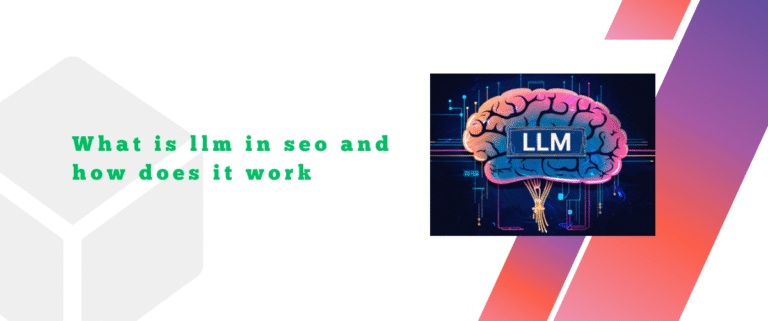
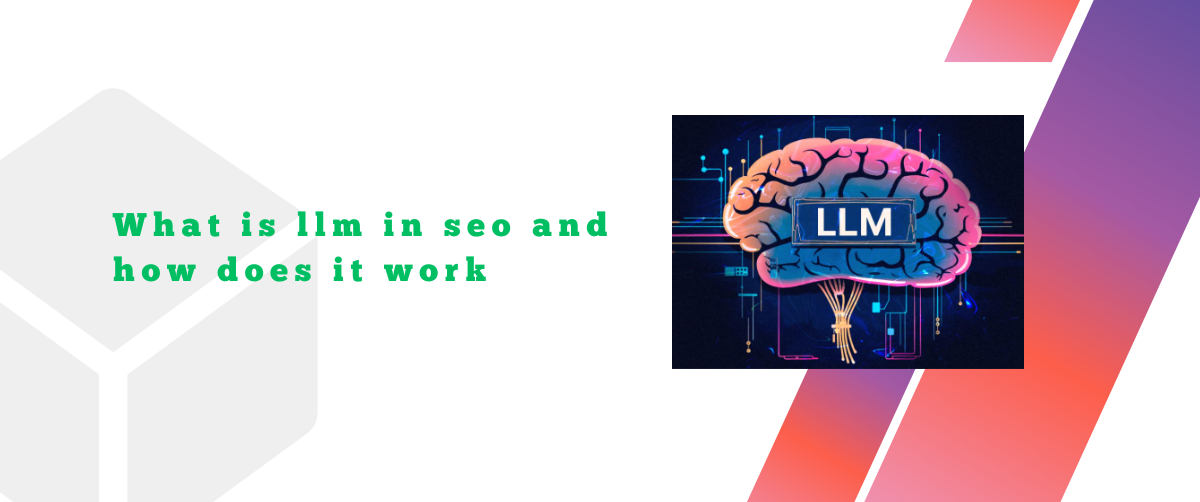
“LLM” stands for Large Language Model — a type of artificial intelligence model (such as ChatGPT, Gemini, Claude) that has been trained on enormous amounts of text data, enabling it to understand and generate human-like language.
In the context of SEO (“Search Engine Optimization”), LLM SEO (also called LLM Search Engine Optimization or LLMO/GEO) refers to the practice of optimising content so that it is not only discovered and ranked by traditional search engines, but understood and cited by large language models when they generate answers or summaries.
In simple terms: instead of just trying to show up on page-1 in Google search results, the aim becomes: getting your content to be used by these AI systems as the answer.
Why does it matter?
The rise of LLM-driven search experiences is reshaping how people look for information online because:
- LLMs are increasingly being embedded in search tools, chat assistants, and browsers, meaning users may get direct answers rather than clicking through multiple links. (source)
- Traditional SEO tactics (keywords, backlinks, ranking lists) are still valid, but they need to be supplemented for AI-driven “answer-first” scenarios. (source)
- For businesses and content creators, if your content is not structured or written in a way that LLMs can understand and cite, you may miss out on being referenced in AI-answers.
How do large language models work?
- LLMs are neural networks with billions of parameters trained on huge corpora of text (books, articles, web pages) so they learn statistical and semantic patterns in language.
- When given a prompt or query, they generate text (answers) based on their training and/or by retrieving external documents (in some “search-augmented” systems) and then composing an answer.
- They place a high premium on context, user intent, and meaning rather than just matching exact keywords.
How does LLM SEO work?
When you want to optimize for LLMs, you’ll want to focus on a few shifts compared to traditional SEO:
- Context & conversational language: Your content should be clear, conversational, and structured as if you’re directly responding to user intent.
- Structured data & semantic clarity: Using headings, schema markup (structured data), semantic keywords, and clear entity definitions helps LLMs recognize what your content is about.
- Authoritativeness and trust: You’ll need to build your content’s credibility (sources, clear facts, depth). Shallow or keyword-stuffed content likely won’t suffice.
- Content designed for “being the answer”: Address the query completely, neatly, with depth and clarity rather than just optimizing for link clicks.
- Technical and crawl aspects: Technical SEO—site speed, clean markup, crawl-able structure—still matters, but content must be accessible and understandable to bots/crawlers tied to LLMs.
Example: What this shift looks like
Imagine a user asks: “What’s the best way to optimize my website content for AI search?”
In a traditional SEO world you might focus on keyword variations, backlinks, meta tags.
In an LLM-SEO world you’d craft a single authoritative piece that:
- Directly answers the question in conversational tone
- Uses structured headings like “Why AI search matters”, “Key steps”, “Common mistakes”
- Uses schema markup (FAQ schema, article schema)
- Defines key entities (“large language model”, “generative search engine”) and builds context
- Is deep enough that the LLM can cite you as a source of truth
Challenges & considerations
- The field is still relatively new, and strategies remain experimental. (source)
- Many LLMs are closed-box, so it can be hard to know exactly how they select content to cite. (source)
- Over-optimising may lead to issues; content needs to genuinely add value.
What you should do as a content/SEO creator
- Review existing content for clarity, structure, and schema
- Add semantic richness: define entities, contexts, related ideas
- Use FAQ sections, structured data markup (schema.org)
- Maintain technical SEO (crawlability, speed, mobile-friendly)
- Monitor AI citations/visibility
- Stay updated with evolving LLM SEO practices
Summary
LLM SEO is about optimizing content to be understood and cited by AI-driven search engines. By focusing on clarity, structure, semantic richness, technical SEO, and authority, websites can position themselves not just to rank but to be the answer in AI-powered searches.
FAQs
Q1: Is LLM SEO the same as traditional SEO?
No — LLM SEO focuses on being understandable by AI models and citable as an answer.
Q2: Which large language models are relevant for SEO?
ChatGPT, Gemini, Claude, Perplexity — any AI tool using LLMs to generate answers.
Q3: What kinds of content work well for LLM SEO?
Clear, structured, authoritative content that answers user intent and cites trustworthy sources.
Q4: Does keyword research still matter?
Yes, but focus on conversational, long-tail, question-style keywords.
Q5: Will traditional SEO tactics become irrelevant?
No, they remain important but must be complemented with LLM optimisation tactics.
Q6: How do I measure success in LLM SEO?
Check if content is cited by AI/LLM tools, engagement, and brand visibility.
Q7: What are some pitfalls to avoid?
Avoid shallow content, keyword-stuffing, and manipulative tactics.
Q8: Is this relevant for all websites or only big brands?
It’s relevant for many sites, especially knowledge hubs and guides, as long as content is authoritative and structured.